
How to Read Revelation Without Fear or Confusion
Keys to reading Revelation: its literary genre, its structure of sevens, the use of symbols, the schools of interpretation and its central message of hope.
In this article
- What the book says about itself
- Understand the genre before the details
- Use the structure of sevens as a map
- Interpret the symbols with four questions
- Know the four schools of interpretation
- Worked example: reading Revelation 5:1-7
- Common mistakes when reading Revelation
- A 7-day reading plan
- Questions for reflection or a small group
- Frequently asked questions
Many people open Revelation, read about seals, beasts and bowls of wrath, and close the book more afraid than when they started. Others give up because every preacher seems to say something different. The problem is rarely a lack of faith; it is a lack of reading keys. Here you will see how the book works, how to interpret its symbols with confidence, and where to start this very week.
What the book says about itself
Before any theory, listen to how Revelation introduces itself.
A revelation of Jesus Christ
The book opens with these words: "The Revelation of Jesus Christ, which God gave unto him, to shew unto his servants" (Revelation 1:1). Its main subject is not the antichrist or a calendar of the end, but Christ himself. The same verse says these things were "signified" to John "by his angel". The Greek verb (sēmainō) is related to the word for "sign" (sēmeion), and many commentators see in it a first hint that the book will speak in symbols.
A prophecy to be kept
Then comes a very direct promise:
Blessed is he that readeth, and they that hear the words of this prophecy, and keep those things which are written therein: for the time is at hand.
Revelation 1:3
Notice the three verbs: read, hear and keep. The text was meant to be read aloud in the congregation. The blessing is not in decoding every detail but in obeying what it teaches.
A letter to real churches
In Revelation 1:9-11, John calls himself a "companion in tribulation" who "was in the isle that is called Patmos, for the word of God" (tradition says he was exiled there), and he is told to write to the seven churches of Asia, from Ephesus to Laodicea. The date is debated, and many place it near the end of the first century. So the first question of any reading is this: what did the message mean to those pressured Christians? If an interpretation would have made no sense to them, it is probably wrong.
Advertisement
1. Understand the genre before the details
Revelation blends three genres: it is a letter, a prophecy and an apocalypse, a kind of writing familiar to Jews of that time, full of visions, numbers and vivid images. The closest model is Daniel 7, where four great beasts "came up from the sea" and stand for human kingdoms. No one reads Daniel 7 expecting real animals to climb out of the Mediterranean; the images reveal the character of empires.
One contrast helps a great deal. In Daniel 12:4 the prophet is told to seal the book "even to the time of the end". In Revelation 22:10 John hears the opposite: "Seal not the sayings of the prophecy of this book". Revelation was opened so that the church could understand it. If Daniel is still new to you, it is worth reading how to understand the book of Daniel first.
2. Use the structure of sevens as a map
The book is arranged in blocks, most of them marked by the number seven. A simple map:
- Chapters 1 to 3: the vision of the glorified Christ and the letters to the seven churches.
- Chapters 4 and 5: the throne room and the Lamb who takes the sealed book.
- Chapters 6 to 8: the seven seals.
- Chapters 8 to 11: the seven trumpets.
- Chapters 12 to 14: the conflict between the dragon, the beasts and the people of God.
- Chapters 15 and 16: the seven bowls.
- Chapters 17 to 19: the fall of Babylon and the coming of the faithful Rider.
- Chapters 20 to 22: the thousand-year reign, the final judgment and the new creation.
Watch for the interludes: between the sixth and seventh seals comes chapter 7, and between the sixth and seventh trumpets comes the passage from 10:1 to 11:14. In these pauses the focus shifts from judgment to the protection and witness of the church. Many interpreters see the seals, trumpets and bowls as telling the same period from different angles with growing intensity; others read the series as a chronological sequence. Whatever your view, knowing which block you are in keeps you from getting lost.
Advertisement
3. Interpret the symbols with four questions
The symbols in Revelation are not an open code. Ask these questions, in this order:
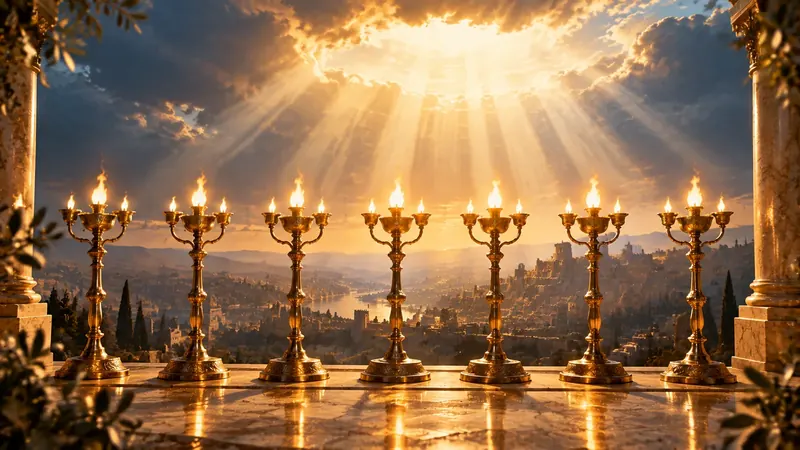
- Does the text explain it? Often it does. In Revelation 1:20 the seven stars "are the angels of the seven churches" and the seven candlesticks "are the seven churches". In Revelation 12:9 the great dragon is identified as "that old serpent, called the Devil, and Satan".
- Where does the image come from in the Old Testament? The beast of Revelation 13:1-2 rises from the sea with features of the beasts in Daniel 7. The four living creatures of Revelation 4:7 (lion, calf, man and eagle) echo the faces Ezekiel saw in Ezekiel 1:10.
- What does the symbol communicate, not just what it "is"? Horns speak of power, eyes of knowledge, white of purity and victory. Many scholars read seven as fullness.
- How did this comfort or warn the seven churches? The symbol always serves the pastoral message of the book.
4. Know the four schools of interpretation
Serious Christians read Revelation in different ways, and knowing those readings breeds humility:
- Preterist: holds that most of the visions were fulfilled in the first century, in connection with Rome and Jerusalem.
- Historicist: sees in the book a panorama of church history up to Christ's return.
- Futurist: expects most of chapters 4 to 22 to be fulfilled in the final period before Jesus comes back.
- Idealist: reads the visions as lasting portraits of the conflict between God and evil in every age.
Many combine elements of more than one, and there are also different readings of the thousand years in Revelation 20 (amillennial, premillennial and postmillennial). What all of them affirm outweighs the differences: Christ will return, evil will be judged and God will make all things new. To see what the book teaches about the future without speculation, read what Revelation reveals about the end times.
Worked example: reading Revelation 5:1-7
Context. In chapter 4, John sees God's throne surrounded by worship. In chapter 5, the one on the throne holds a book sealed with seven seals, and no one is worthy to open it. John says in Revelation 5:4, "I wept much".
What John hears. One of the elders tells him: "Weep not: behold, the Lion of the tribe of Juda, the Root of David, hath prevailed" (Revelation 5:5). The lion image comes from Jacob's blessing in Genesis 49:9, and "the Root of David" points to the messianic king. John expects a conqueror.
What John sees. He looks and sees "a Lamb as it had been slain" (Revelation 5:6). It is the same figure, but the picture changes completely. The Lamb recalls the servant of Isaiah 53:7, brought "as a lamb to the slaughter". The Lion's victory came through the cross.
The details. The Lamb has seven horns and seven eyes, which the verse itself explains as "the seven Spirits of God sent forth into all the earth". Through the four questions: the text explains part of the symbol, the Old Testament supplies the roots, and horns and eyes communicate full power and knowledge.
Application. The power that governs history is not the power of the beasts but that of the Lamb who gave himself. For small, persecuted churches, and for anyone suffering today for being faithful, apparent weakness is not defeat. The chapter ends in worship, not anxiety.
Common mistakes when reading Revelation
- Reading with the newspaper in hand. Fitting every headline into a trumpet produces predictions that change every decade.
- Setting dates. No text in the book authorizes calculating the day of Christ's return.
- Taking everything literally or spiritualizing everything. Always ask what the text itself signals.
- Skipping chapters 2 and 3. The letters to the churches show what the book was written for: faithfulness, repentance and endurance.
- Pulling verses out of their block.
- Turning your school of interpretation into a test of faith. Differences over details should not divide believers.
The principles behind these cautions are explained in what biblical hermeneutics is.
A 7-day reading plan
Read one block a day, ideally aloud, with a notebook beside you.
- Day 1: chapter 1. Write down everything it says about who Jesus is.
- Day 2: chapters 2 and 3. For each church, note one commendation, one correction and one promise.
- Day 3: chapters 4 and 5. Compare them with Ezekiel 1 and Isaiah 53.
- Day 4: chapters 6 and 7. Notice how chapter 7 interrupts the seals to show God's people protected.
- Day 5: chapters 8 to 11. Note the interlude from 10:1 to 11:14 before the seventh trumpet.
- Day 6: chapters 12 to 16. List who stands on each side of the conflict and compare the bowls with the trumpets.
- Day 7: chapters 17 to 22. Why does the fall of Babylon lead to praise? End with this verse:
And God shall wipe away all tears from their eyes; and there shall be no more death, neither sorrow, nor crying, neither shall there be any more pain: for the former things are passed away.
Revelation 21:4
Questions for reflection or a small group
- What changed in how you see Revelation when you learned it opens as "The Revelation of Jesus Christ"?
- In Revelation 5, John hears about a Lion and sees a Lamb. Where do you expect strength and God answers with the cross?
- Which of the seven churches looks most like your community today? Why?
- How does reading without fear change the way you face the news and suffering?
- What step of faithfulness is the book asking of you this week?
Frequently asked questions
How do I understand Revelation as a beginner?
Start with chapters 1 to 5, which introduce Jesus, the churches and the throne room, and keep the Old Testament close by. Before interpreting a symbol, check whether the text explains it. Do not try to solve everything on the first reading.
What is the structure of the book of Revelation?
The book is organized in series of seven (letters, seals, trumpets and bowls), with interludes and visions of the conflict between God and evil. It opens with a vision of Christ and closes with the new creation. Many see the series as spiral repetitions; others, as a sequence.
Do the symbols in Revelation have a fixed meaning?
Some do, because the book explains them, like the stars and candlesticks of Revelation 1:20. Others have clear roots in the Old Testament. On many details interpreters differ, so hold firmly to what the text makes clear and humbly to what it leaves open.
What is the central message of Revelation?
The Lamb has triumphed, God will judge evil, and his people, though persecuted, will be vindicated. In the end God will dwell with his people and there will be no more death or pain (Revelation 21:3-4). The book was written to comfort the church, not to frighten it.
The roots of these visions are in Daniel, so begin with how to understand the book of Daniel. When you are ready for the question of the future, continue with what Revelation reveals about the end times, and read Revelation itself one block at a time, expecting to meet the Lamb.

Vagner Soares is a presbyter with pastoral ordination, a mentor and a digital entrepreneur with more than 10 years of experience in technology, digital marketing and education.
Keep reading
 ProphecyHow to Understand the Book of Daniel: A Beginner's GuideThe structure of the book of Daniel, its two halves, the empires in its visions, the 70 weeks prophecy and reading keys to avoid getting lost in the symbols.Read the article
 ProphecyHow to Understand the Prophecies of the Book of Daniel, Chapter by ChapterA chapter-by-chapter guide to Daniel's main prophetic visions: the statue, the four beasts, the ram and the goat, the seventy weeks, and what each announces.Read the article
 Bible studyOld and New Testament Overview: The Whole Bible as One StoryThe Bible summarized as one story, from creation and fall to Christ, the church and new creation, with each group of books and how the testaments connect.Read the article