
The fruit of the Spirit: the nine qualities of Galatians 5 explained
The context in Galatians 5, the difference between the works of the flesh and the fruit of the Spirit, what each of the nine words means, why the KJV list differs from modern ones, and how fruit ripens.
In this article
If you grew up with this list in English, there is a decent chance you learned nine words that your Bible does not actually use.
The familiar modern list runs: love, joy, peace, patience, kindness, goodness, faithfulness, gentleness, self-control. The King James has:
But the fruit of the Spirit is love, joy, peace, longsuffering, gentleness, goodness, faith, Meekness, temperance: against such there is no law.
Galatians 5:22-23
Longsuffering. Gentleness. Faith. Meekness. Temperance. Five of the nine are different English words, and three of them have shifted meaning since 1611 — notably gentleness, which in the KJV stands where modern versions say kindness, while the modern gentleness appears as meekness further down the list.
None of this is a translation error. It is four hundred years of English drift, and it is worth sorting out before looking at the qualities themselves.
Our main source throughout is the Bible. Scripture here is quoted from the King James Version.
The context: freedom that does not become a mess
Galatians is Paul's angriest letter, written against people adding law-keeping to the gospel. By chapter 5 he has won that argument and faces the obvious next problem: if you are not under rules, what stops the whole thing dissolving?
His answer is not a replacement rulebook. It is a different source of behaviour.
This I say then, Walk in the Spirit, and ye shall not fulfil the lust of the flesh.
Galatians 5:16
The logic is displacement rather than suppression. Walk in the Spirit, and the other thing does not get fulfilled — not because you fought it to a standstill, but because something else occupied the ground.
Works of the flesh, fruit of the Spirit
Paul puts two lists side by side (Galatians 5:19-23), and the nouns he chooses are doing deliberate work.
Works are produced. You manufacture them, and they come out as items — the list he gives runs to fifteen or so, and it is a catalogue of separate acts.
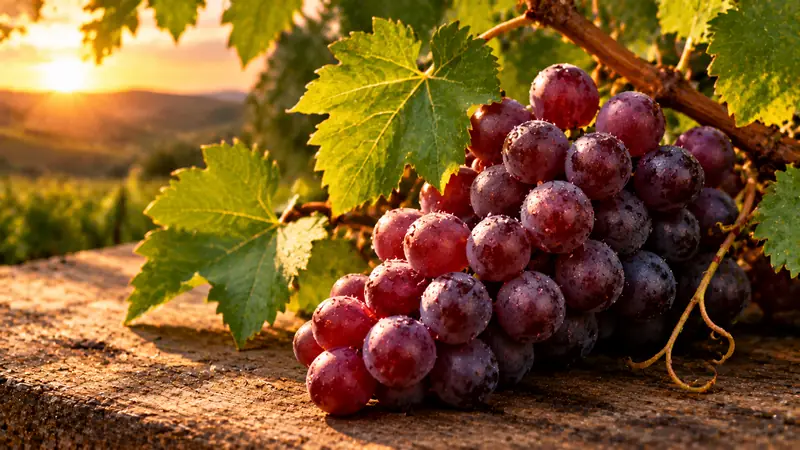
Fruit is grown. It is not produced by effort, it appears on something living, it takes time, and it is seasonal. A tree does not strain to bear fruit; it bears fruit if it is healthy and connected.
That contrast is the single most useful thing in the passage. It tells you what kind of effort is appropriate, and what kind is a waste.
Advertisement
Fruit, singular
Paul writes the fruit of the Spirit is, not are, and then lists nine things. Not nine fruits to be collected separately.
The practical implication: this is one crop with nine features, so you cannot specialise. There is no such thing as being strong on love but exempt from self-control, or patient but not kind. They come as a unit, and a glaring gap in one usually means the whole is less healthy than it looks.
The nine qualities
They fall naturally into three groups of three — toward God, toward others, toward yourself.
Toward God: love, joy, peace
Love. The Greek is agapē, the word the New Testament uses for a settled commitment to another's good rather than a feeling about them. 1 Corinthians 13 is the definition; it describes behaviour throughout, not emotion.
Joy. Not cheerfulness. Paul wrote about joy most while in prison (Philippians), which means it is not produced by circumstances and not removed by them.
Peace. Primarily peace with God — a settled standing rather than a calm feeling — which then produces peace with people and within yourself. Paul calls Christ our peace in Ephesians 2:14.
Toward others: longsuffering, gentleness, goodness
Longsuffering. The KJV's word is better than patience, and worth keeping. It is literally long-suffering: putting up with something for a long time. Not waiting calmly for a bus, but bearing with a person who is hard to bear with, repeatedly.
Gentleness. Here the KJV means what modern versions call kindness — the Greek word is chrēstotēs, usefulness and generosity in dealing with people. Active, not merely soft.
Goodness. Moral integrity that benefits others. In older English usage it carried the sense of generosity as well as uprightness.
Toward yourself: faith, meekness, temperance
Faith. The Greek pistis means both belief and faithfulness, and in a list of character qualities the second sense is primary — reliability, being someone whose word holds. Modern versions therefore say faithfulness, which is clearer.
Meekness. The modern equivalent is gentleness, and both words have problems in current English, because neither means weakness. The Greek prautēs describes strength that does not need to assert itself. The same word is used of Moses, who was no pushover, and Jesus applies it to himself (Matthew 11:29).
Temperance. The modern word is self-control. The Greek is about having power over oneself. Note that it is last on the list and it is still fruit — self-control is not the one item on the list you generate by willpower.
Meekness, temperance: against such there is no law.
Galatians 5:23
Against such there is no law is Paul's closing joke on the legalists. You cannot legislate against patience. There is no rule that needs adding.
Advertisement
The portrait is of a person
Read the nine qualities as a description and you are reading a description of Jesus.
That is the point of fruit language in the first place. The Spirit's work is not to install nine traits but to make a person resemble Christ, and Paul says so directly elsewhere: conformed to the image of his Son (Romans 8:29).
Which is also the test to apply to any claimed work of the Spirit. Not whether it is impressive, but whether this list is growing.
Lord, I cannot manufacture any of this. Make me the kind of person in whom it grows.
Prayer
How fruit actually grows
I am the vine, ye are the branches: He that abideth in me, and I in him, the same bringeth forth much fruit: for without me ye can do nothing.
John 15:5
Jesus gives the mechanism in one image. The branch does not produce fruit by effort; it produces fruit by staying attached. Without me ye can do nothing is not encouragement — it is a statement about how the process works.
Four things follow, and they are practical rather than mystical.
Stay connected. The vine image means ordinary, unexciting continuity: Scripture, prayer, the company of other Christians. Fruit grows on branches that remain.
Expect seasons. No fruit appears in a week. Trees have dormant periods, and so do people. A barren stretch is not necessarily a failure.
Expect pruning. Jesus says the Father prunes fruitful branches so they bear more (John 15:2). Cutting back is part of the method, which is a hard thing to hear while it is happening.
Notice where the testing happens. Patience is not tested in solitude. Kindness is not tested when everyone is pleasant. Fruit grows in the places where it is being demanded — which means the difficult relationship is not an obstacle to growth but the field it happens in.
What this rules out: trying to produce the fruit directly. Deciding to be more patient by effort produces, at best, a managed performance that fails under pressure. The fruit grows as a by-product of connection, which is why John 15 and Galatians 5 are both about abiding rather than striving.
Fruit and gifts are not the same thing
A distinction worth holding clearly, because confusing them causes real damage.
Gifts (1 Corinthians 12) are abilities for serving others. They are distributed selectively — the Spirit gives as he wills, and nobody has all of them. They can be exercised by someone whose character is in poor shape, which is exactly the problem Paul addresses in Corinth.
Fruit is character. It is intended for everyone, grows over time, and cannot be faked for long.
Paul's own ranking is explicit. Between the chapter on gifts and the chapter on their use, he inserts 1 Corinthians 13: tongues, prophecy, knowledge and even sacrificial giving are worth nothing without love.
The practical upshot: impressive gifting is not evidence of spiritual health. The nine words in Galatians 5 are.
Father, I would rather be gifted than good, and that is the wrong way round. Keep me attached to the vine, and let the fruit come at your pace. Make me patient where I am being tested, and kind where it costs me. In Jesus' name, amen.
Prayer
Questions for reflection or small group
- Which of the nine is most obviously missing in you right now?
- The contrast is between works produced and fruit grown. How has that changed how you approach it?
- Where is the field in which your patience is currently being grown?
- Have you valued gifting over character in yourself or in others?
What is the fruit of the Spirit?
The character the Holy Spirit produces in a believer, listed in Galatians 5:22-23: love, joy, peace, longsuffering, gentleness, goodness, faith, meekness and temperance in the KJV — rendered in modern versions as patience, kindness, faithfulness, gentleness and self-control.
Is it nine fruits or one fruit of the Spirit?
One. Paul writes the fruit of the Spirit is, singular, and then lists nine features. It is one crop with nine characteristics, which means you cannot be strong in some and exempt from others.
What is the difference between the fruit and the gifts of the Spirit?
Gifts are abilities for serving others, distributed selectively (1 Corinthians 12:11), and can be exercised by someone of poor character. Fruit is character, intended for every believer, and grows over time. Paul places love above all gifts in 1 Corinthians 13.
How do you develop the fruit of the Spirit?
Not by trying to produce it directly. Jesus gives the mechanism in John 15:5 — a branch bears fruit by remaining attached to the vine. In practice that means ordinary continuity in Scripture, prayer and Christian company, with the fruit appearing as a by-product.
What are the works of the flesh?
The list Paul sets opposite the fruit in Galatians 5:19-21, covering sexual immorality, idolatry, hatred, strife, envy, drunkenness and more. He calls them works rather than fruit because they are produced rather than grown.
If you want to go deeper into life in the Spirit, the ebook Las 13 Cartas de Pablo Explicadas Versículo por Versículo (in Spanish) goes deeper into this subject.
Sources
- The Holy Bible, King James Version. Primary source for this article: every biblical quotation comes from it, and the other sources serve only to show where each Christian tradition put its reading of the text in writing.
- eBible.org. The Holy Bible, King James Version.
Consulted on November 15, 2026.
Free
Read the whole Bible in one year
Download the plan as a PDF: 365 days, Old and New Testament side by side, so you can start today — not on January 1st.
One study a week, nothing else. One click to leave. Privacy policy
Done. Your plan is here: Download the PDF
I couldn’t register that right now. Please try again in a moment.

Vagner Soares is a presbyter with pastoral ordination, a mentor and a digital entrepreneur with more than 10 years of experience in technology, digital marketing and education.
Keep reading
 Bible studyGalatians: a summary and the freedom of the gospelA summary of Galatians: why Paul wrote it, his defence of grace against legalism, the three-part structure, and how Christian freedom works in practice.Read the article
 Bible studyWho is the Holy Spirit: what the Bible teaches about himWho the Holy Spirit is: a divine person, not a force. What he does in the Old and New Testaments, in conversion, and in everyday Christian life.Read the article
 Bible studyEphesians: a study guide, summary and applicationA study of Ephesians: what we are in Christ and how to live it. The two-part structure, the key verses, and a ready plan for six group sessions.Read the article