
The seven churches of Revelation: what Jesus said to each
What Jesus said to each of the seven churches in Revelation 2 and 3, the pattern the letters follow, which two received no rebuke, and the questions these messages put to a congregation now.

In this article
One of these seven churches gave English a word. Laodicean is in the dictionary, meaning indifferent or half-hearted in religion or politics — and it comes straight from the letter in Revelation 3, which is the only place in Scripture the city appears in that sense.
That is a fair indication of how these seven short letters have landed. They are addressed to real congregations in real cities, and they read as though they were written about churches anyone has attended.
Our main source throughout is the Bible. Scripture here is quoted from the King James Version.
Where they were, and why seven
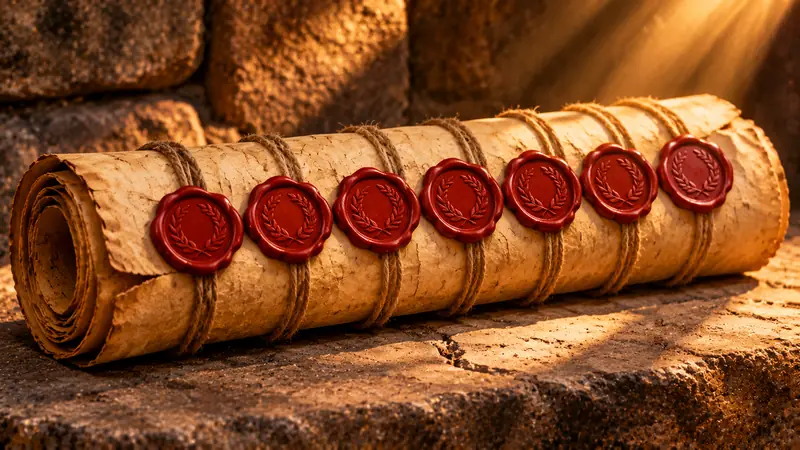
All seven were in the Roman province of Asia, in what is now western Turkey, and they sit roughly on a circular route — Ephesus on the coast, then north to Smyrna and Pergamos, then inland and south through Thyatira, Sardis, Philadelphia and Laodicea. A courier carrying the scroll would have visited them in exactly that order.
So the sequence is a postal route, not a ranking.
Why seven? There were other churches in the region — Colossae, for one, which Paul wrote to and which is not addressed here. Seven is the number of completeness in biblical usage, so the selection represents the whole church while remaining seven actual congregations with seven actual sets of problems.
The pattern of the letters
Each follows the same shape, which makes them easy to read side by side.
- To the angel of the church in… — angel here can mean messenger, and may refer to a leader.
- A description of Christ, drawn from the vision in chapter 1, and chosen to fit the letter.
- I know thy works — in every one of the seven.
- Commendation — in five of the seven.
- Rebuke — in five of the seven.
- A command, usually to repent or to hold fast.
- He that hath an ear, let him hear — the same formula each time.
- A promise to him that overcometh.
He that hath an ear, let him hear what the Spirit saith unto the churches; To him that overcometh will I give to eat of the tree of life, which is in the midst of the paradise of God.
Revelation 2:7
The promise formula and the hearing formula are addressed to the individual, inside a letter addressed to a congregation. Both levels run through all seven.
Advertisement
The seven messages
Ephesus: the church that lost its first love (2:1-7)
The largest city and the most impressive church. Jesus commends their works, their patience, their refusal to tolerate false teachers, and their endurance. By any institutional measure they were doing well.
Nevertheless I have somewhat against thee, because thou hast left thy first love. Remember therefore from whence thou art fallen, and repent, and do the first works; or else I will come unto thee quickly, and will remove thy candlestick out of his place, except thou repent.
Revelation 2:4-5
*Note left, not lost. The KJV says thou hast left thy first love — a departure rather than a misfortune. And the remedy has three parts: remember, repent, and do the first works*. Not recapture a feeling; resume an activity.
The warning is the removal of the lampstand — the church ceasing to be a church while continuing to function.
The question it asks: is your doctrine intact and your love gone?
Smyrna: the church that suffers (2:8-11)
No rebuke at all. One of only two.
Jesus acknowledges their poverty — and then says they are rich. They are facing imprisonment and worse.
Fear none of those things which thou shalt suffer: behold, the devil shall cast some of you into prison, that ye may be tried; and ye shall have tribulation ten days: be thou faithful unto death, and I will give thee a crown of life.
Revelation 2:10
Be thou faithful unto death. This is the hardest instruction in the seven letters, and it comes with no promise of relief in this life, only the crown of life beyond it.
The question it asks: if everything were taken, would there be anything left?
Pergamos: the church that tolerates (2:12-17)
The city was a centre of imperial cult worship, which is probably why Jesus calls it the place where Satan's seat is. They have held his name and not denied the faith even when one of them, Antipas, was killed.
But they tolerate teachers whose doctrine corrupts. The rebuke is not for holding error but for permitting it.
The question it asks: what are you putting up with for the sake of peace?
Thyatira: the church that gives way (2:18-29)
Commended for love, service, faith and patience — and told that their works are increasing, which is unusual in these letters.
And then the longest rebuke of the seven: they are allowing a figure Jesus calls Jezebel to teach immorality and idolatry. Toleration in Pergamos has become participation here.
The question it asks: where has influence been given to someone who should not have it?
Sardis: the church of appearances (3:1-6)
And unto the angel of the church in Sardis write; These things saith he that hath the seven Spirits of God, and the seven stars; I know thy works, that thou hast a name that thou livest, and art dead.
Revelation 3:1
The sharpest sentence in the seven letters. A name for being alive, and dead. Sardis was a city famous for having been captured twice by enemies who climbed its supposedly impregnable cliff while the guards slept — and Jesus tells them to be watchful.
He adds that there are a few who have not defiled their garments. The faithful remnant inside the dying church is named.
The question it asks: is the reputation still being maintained after the substance has gone?
Philadelphia: the church of the open door (3:7-13)
The second church with no rebuke.
I know thy works: behold, I have set before thee an open door, and no man can shut it: for thou hast a little strength, and hast kept my word, and hast not denied my name.
Revelation 3:8
Thou hast a little strength. Not a great deal — and it is commended. This is the smallest-sounding church of the seven and the one Jesus has nothing against.
The question it asks: are you measuring faithfulness by size?
Laodicea: the lukewarm church (3:14-22)
The wealthiest city of the seven, a banking centre known for black wool and an eye ointment, and the only church with no commendation at all.
I know thy works, that thou art neither cold nor hot: I would thou wert cold or hot. So then because thou art lukewarm, and neither cold nor hot, I will spue thee out of my mouth.
Revelation 3:15-16
The geography is part of the rebuke. Nearby Hierapolis had hot mineral springs; Colossae had cold mountain water. Both are useful. Laodicea's water arrived by aqueduct, lukewarm and unpleasant. The image would have been obvious to the readers.
Jesus then names what they say about themselves — rich, increased with goods, needing nothing — and tells them they are wretched, poor, blind and naked (3:17). And he offers them gold, white clothing and eye ointment: the three things their city was famous for selling.
Behold, I stand at the door, and knock: if any man hear my voice, and open the door, I will come in to him, and will sup with him, and he with me.
Revelation 3:20
Note who is outside the door. This verse is used constantly in English-language evangelism as an appeal to individuals, and that use is not wrong — but the door it was first addressed to was a church door, and the one knocking had been shut out by people who thought they had everything they needed.
The question it asks: is self-sufficiency the reason he is outside?
Lord, I would rather be rebuked than ignored. Say to me what you said to them.
Prayer
The seven at a glance
- Ephesus — commended for doctrine and endurance; rebuked for leaving first love. Remember, repent, do the first works.
- Smyrna — commended for faithfulness in poverty and persecution; no rebuke. Be faithful unto death.
- Pergamos — commended for holding the faith under pressure; rebuked for tolerating false teaching. Repent.
- Thyatira — commended for love, service, faith and patience; rebuked for permitting corruption. Hold fast.
- Sardis — a few faithful commended; rebuked for being dead behind a living reputation. Be watchful, strengthen what remains.
- Philadelphia — commended for keeping his word with little strength; no rebuke. Hold fast.
- Laodicea — no commendation; rebuked for lukewarmness and self-sufficiency. Be zealous and repent.
Note the pattern: the two churches with nothing against them were the poor one and the weak one. The wealthy, self-sufficient one got no commendation at all.
Advertisement
Are the seven churches seven ages of history?
This reading — Ephesus as the apostolic age, Laodicea as the present — became popular in the nineteenth century, particularly through dispensational teaching, and it is still widely taught in English-speaking churches.
The case for it: the order is not geographical ranking, and the sequence does roughly map onto a historical narrative if you are inclined to see it.
The case against it: nothing in the text suggests it. The letters address present conditions in named cities with named individuals and local details — Antipas, the aqueduct water, the cliff at Sardis. The route is a courier's circuit. And the historical mapping works mainly for Western church history, which is not the only church history there is.
What is not in dispute: the seven conditions are recognisable in every era, which is why these letters have always been read as addressing the present church. That is a stronger and simpler claim than a timeline.
What the letters ask of your church
- Jesus commends before he corrects, in five of the seven. Any critique of a church that cannot name what is good about it is not following this pattern.
- *He says I know thy works every time. Not I know your statements*.
- The two unrebuked churches were poor and weak. Whatever metrics a church uses, these letters do not use them.
- The most dangerous condition is comfortable. Laodicea did not know anything was wrong. Smyrna, under persecution, got no correction at all.
- Every letter ends with a promise to the individual. Him that overcometh. Whatever the state of the congregation, the invitation remains personal.
Lord Jesus, you walk among the lampstands and you know our works. Where we are lukewarm, make us honest. Where we are small and weak, let that be enough. Where you are standing outside, let us open the door. In your name, amen.
Prayer
Questions for reflection or small group
- Which of the seven does your church most resemble? Which do you?
- Ephesus had the doctrine and lost the love. Which is easier to keep?
- The two unrebuked churches were poor and weak. What does that say about how we measure?
- Revelation 3:20 was first addressed to a church. Does that change how you hear it?
What are the seven churches of Revelation?
Ephesus, Smyrna, Pergamos, Thyatira, Sardis, Philadelphia and Laodicea — seven real congregations in the Roman province of Asia, addressed in Revelation 2 and 3 in the order a courier would have visited them.
What does the church of Laodicea represent?
Lukewarmness and self-sufficiency. It is the only one of the seven with no commendation; Jesus quotes their claim to be rich and needing nothing, and calls them wretched, poor, blind and naked (Revelation 3:15-17). The English word Laodicean, meaning half-hearted, comes from this letter.
Which churches were not rebuked?
Smyrna and Philadelphia. Smyrna was poor and facing persecution; Philadelphia is told it has only a little strength — and both receive commendation with nothing against them.
Do the seven churches represent periods of church history?
That reading became popular in the nineteenth century but nothing in the text supports it. The letters address present conditions in named cities with local details, and the sequence follows a courier's route. The seven conditions are recognisable in every era, which is the more defensible claim.
What does it mean to leave your first love?
Revelation 2:4 says Ephesus had left its first love — a departure rather than a loss. The church still had sound doctrine, endurance and good works. The remedy Jesus gives has three parts: remember, repent, and do the first works again.
If you want to go deeper into what Scripture asks of a church, the ebook Vida de Oración (in Spanish) goes deeper into this subject.
Sources
- The Holy Bible, King James Version. Primary source for this article: every biblical quotation comes from it, and the other sources serve only to show where each Christian tradition put its reading of the text in writing.
- eBible.org. The Holy Bible, King James Version.
Consulted on November 15, 2026.
Free
Read the whole Bible in one year
Download the plan as a PDF: 365 days, Old and New Testament side by side, so you can start today — not on January 1st.
One study a week, nothing else. One click to leave. Privacy policy
Done. Your plan is here: Download the PDF
I couldn’t register that right now. Please try again in a moment.

Vagner Soares is a presbyter with pastoral ordination, a mentor and a digital entrepreneur with more than 10 years of experience in technology, digital marketing and education.
Keep reading
 ProphecyRevelation: a summary of the book block by blockA summary of Revelation in seven blocks: the letters, the throne, the seals, the trumpets, the dragon and the beasts, Babylon's fall and the new creation.Read the article
 ProphecyThe four horsemen of the Apocalypse: who they are and what they meanThe four horsemen of the Apocalypse explained: the white, red, black and pale horses, what each represents, where the image comes from and the debate over the first.Read the article
 ProphecyThe millennium: what the Bible says and the three Christian viewsThe millennium: the one passage that mentions a thousand years, the three Christian views with a source for each side, their texts, and what all three affirm.Read the article